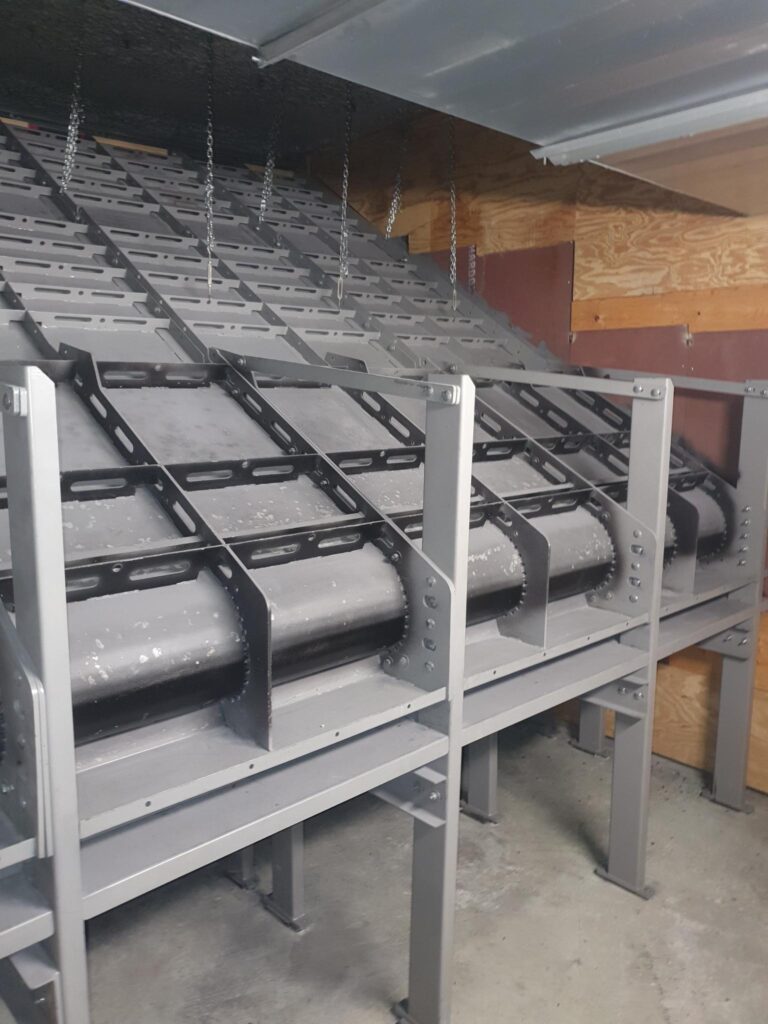
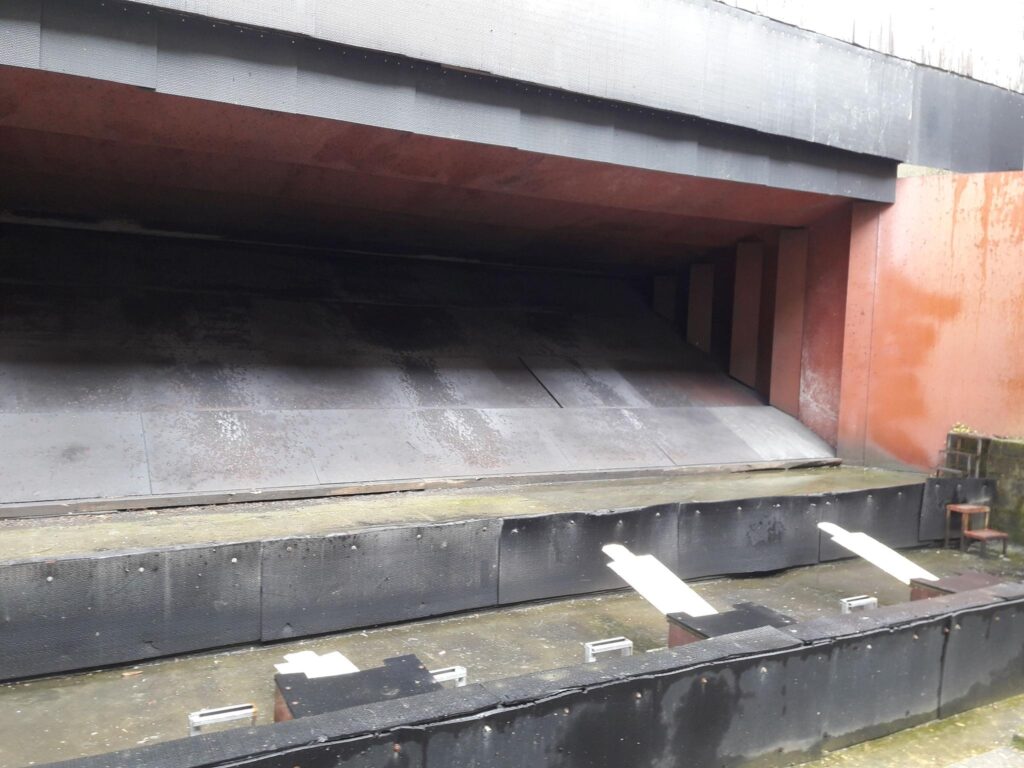
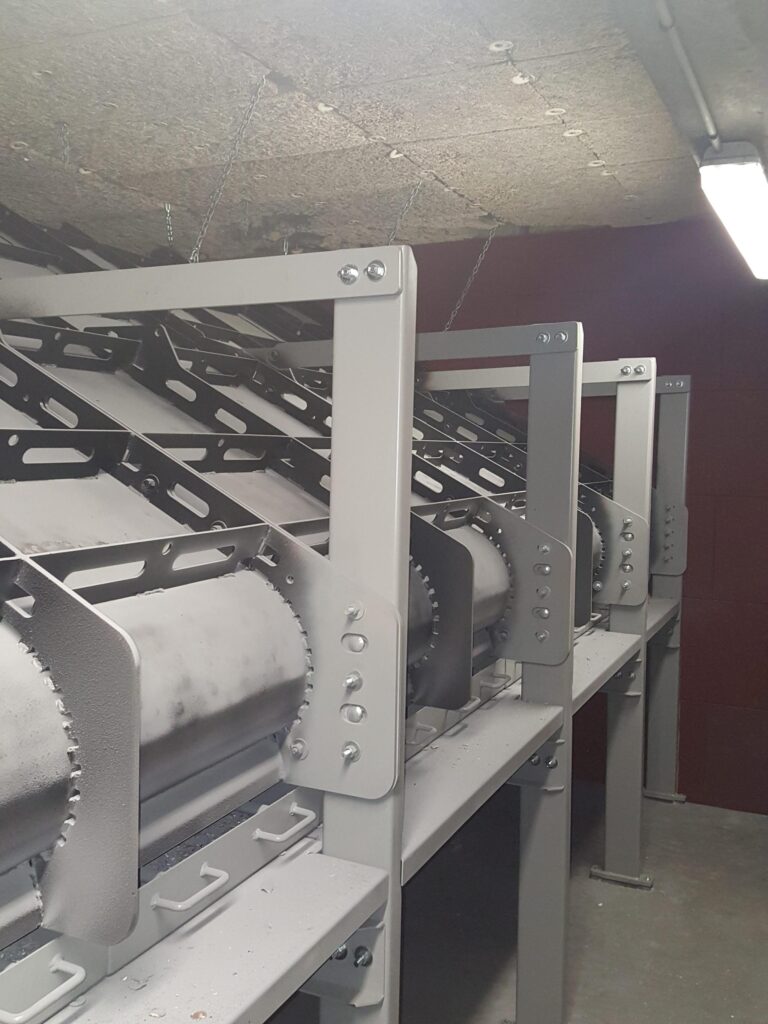
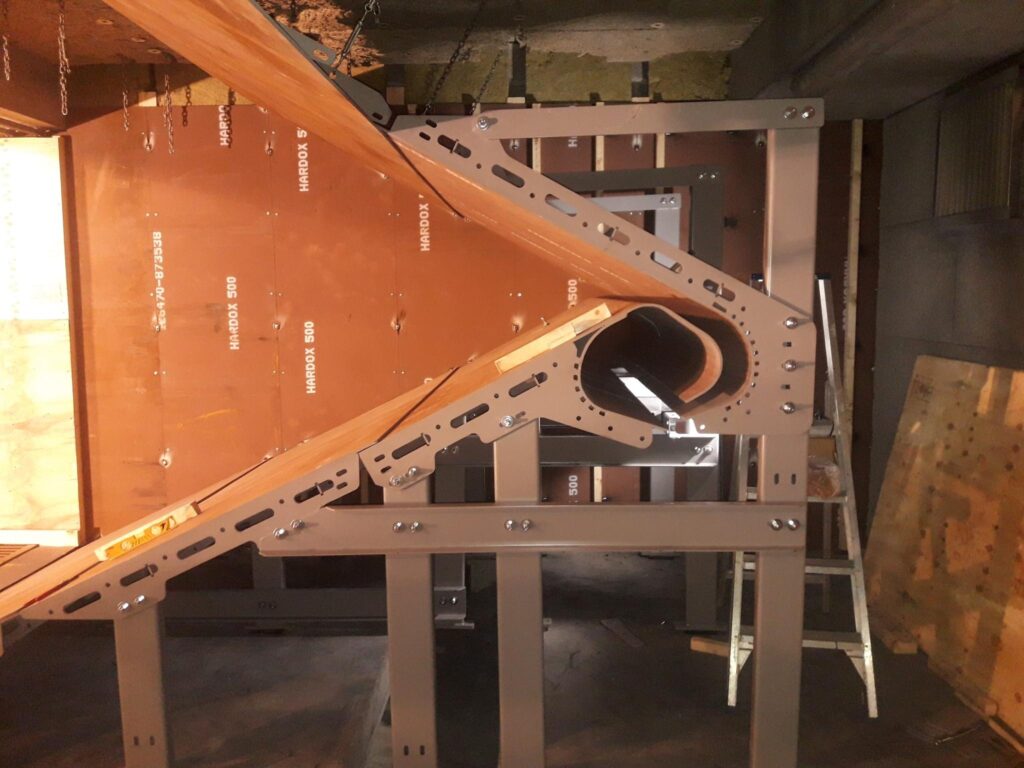
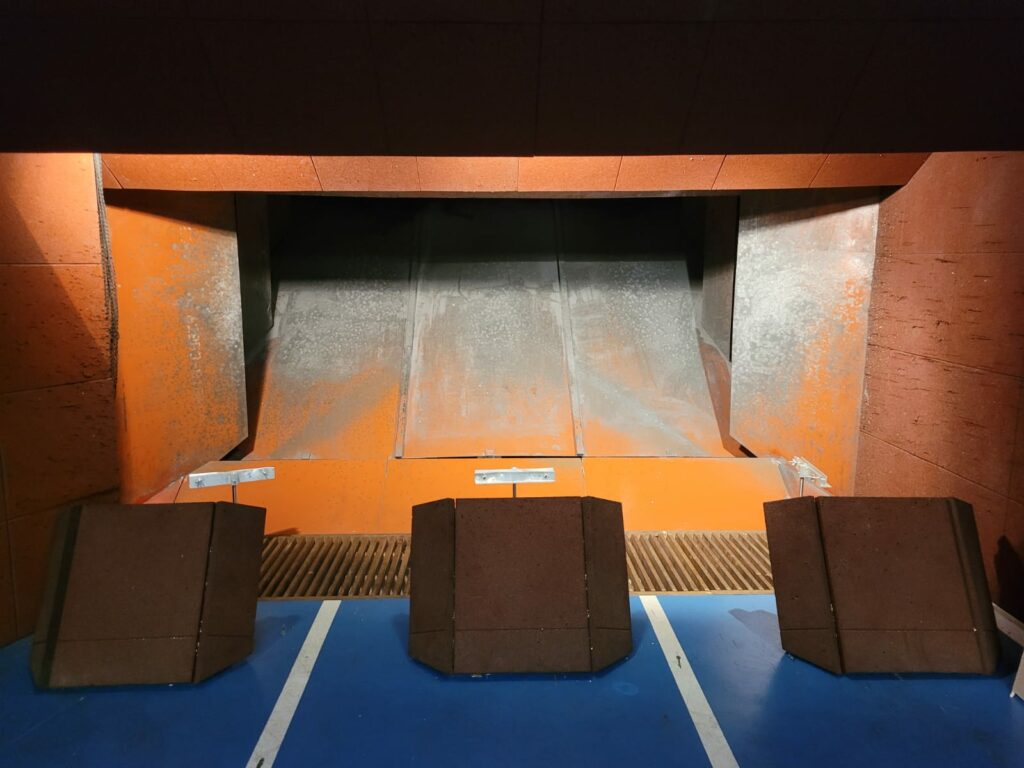
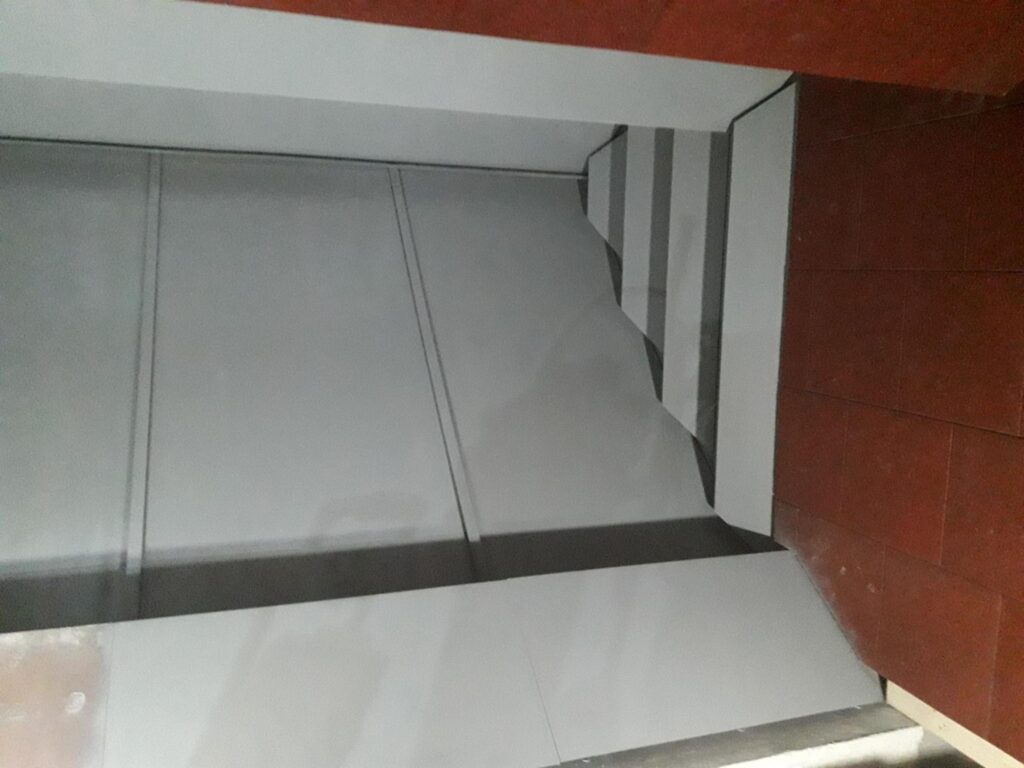
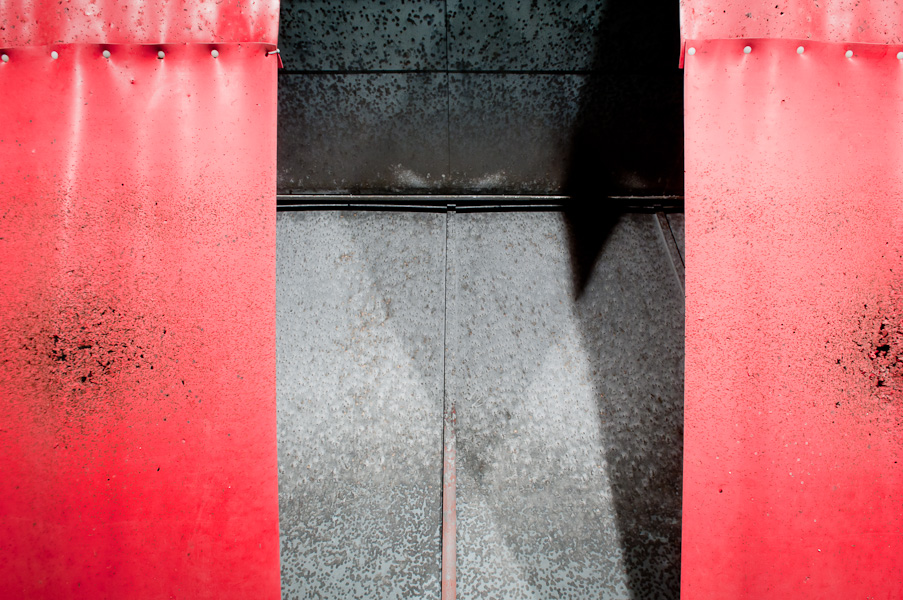
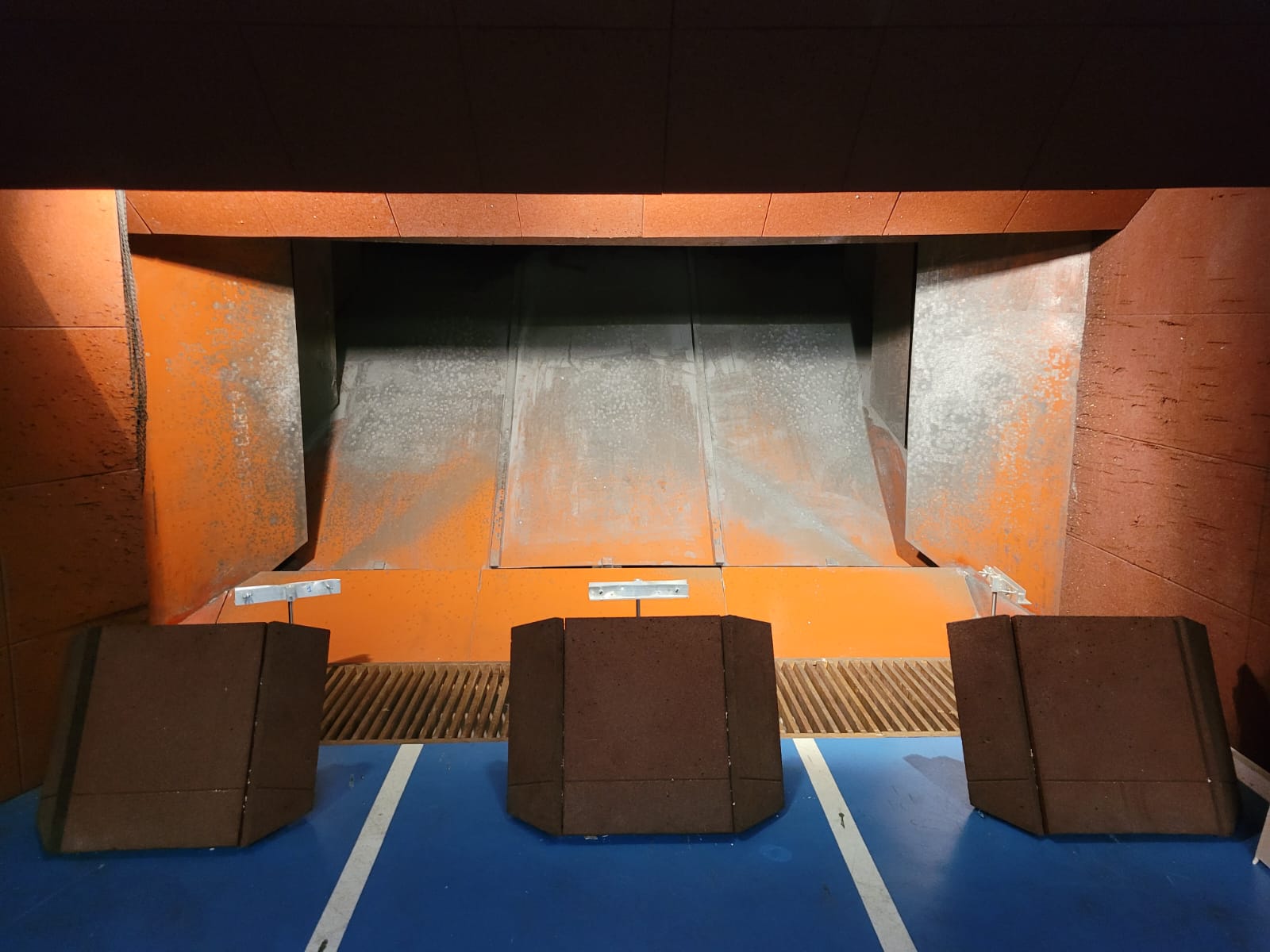
The escalator bullet trap is recommended for large shooting ranges. Its main quality is to present no edges facing the shooter and therefore to limit the risk of ricochet. The heavy version is resistant to ammunition up to 7.62 mm caliber.
Escalator bullet trap
Working of an escalator bullet trap
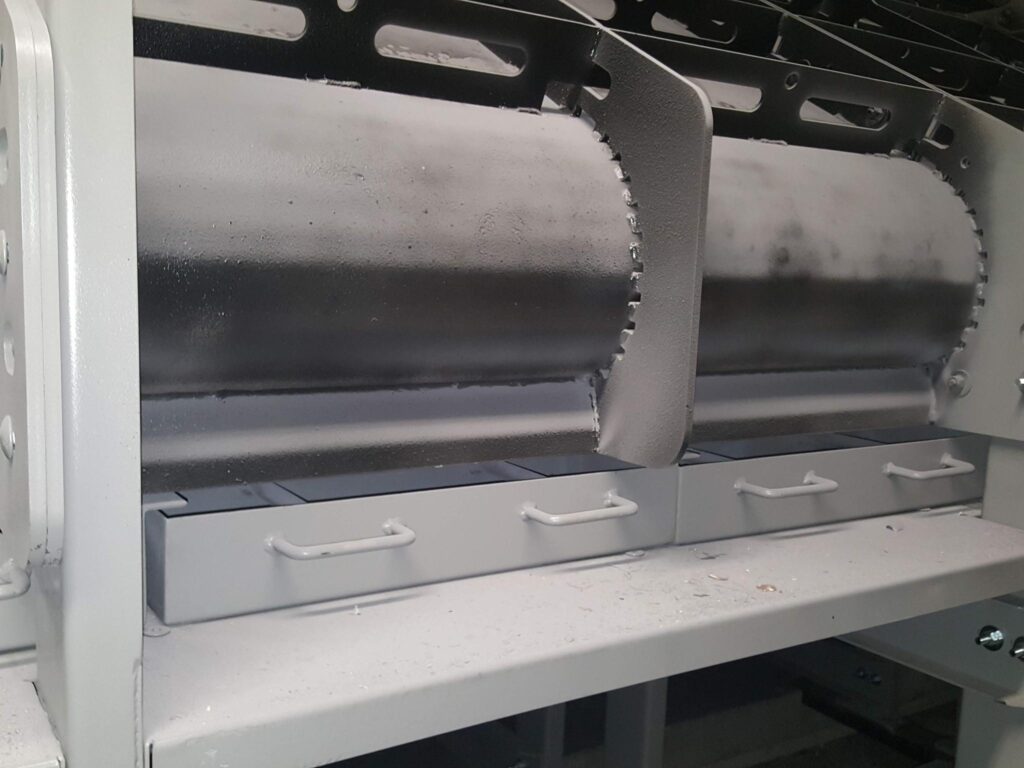
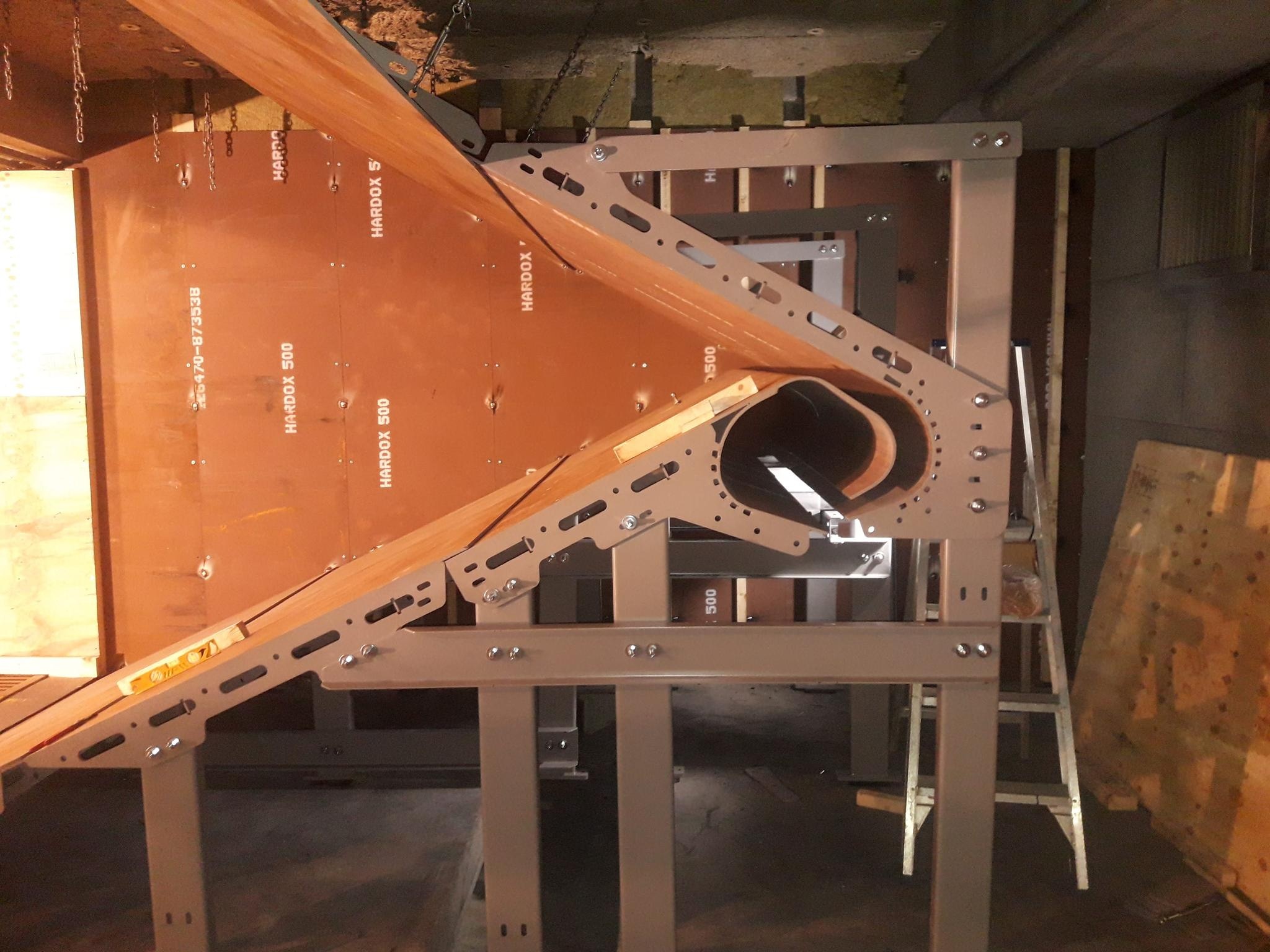
This V-shaped bullet trap diverts the trajectory of the bullets to a deceleration chamber, where they lose their energy and finally fall into the recovery bin.
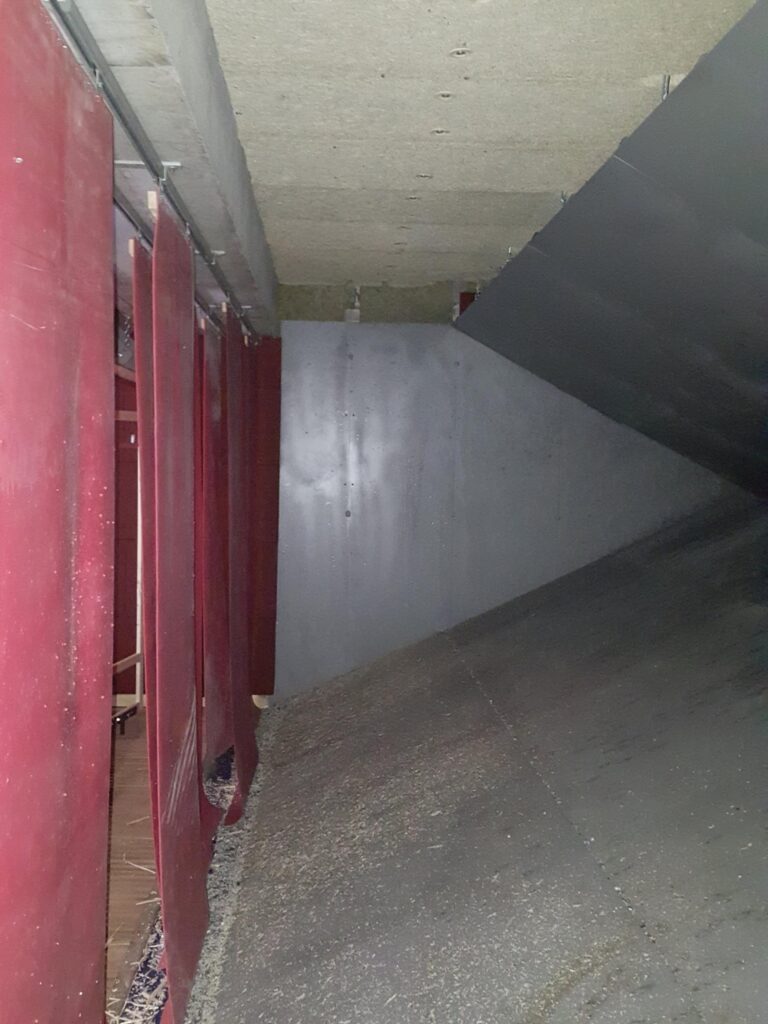
For maximum safety, we recommend placing non-return curtains in front of the bullet trap. We also recommend the installation of baffles and ballistic wall panels.
This bullet trap exists in different versions. Its great advantage is to present no edges facing the shooter, which allows shots from all angles.
Lightweight escalator bullet trap: suitable for handguns
- Composition: inclined steel plates in the shape of a funnel with deceleration chamber (snail) at the back.
- Retrieval of bullets at the foot of the bullet trap
- Special 8mm steel impact plates (Brinell hardness 450?????)
- Depth: about 4m
- Resistance to calibres up to about 2000 joules (9mm, .357, .38, .45)
Heavy escalator bullet trap: suitable for both handguns and shoulder weapons
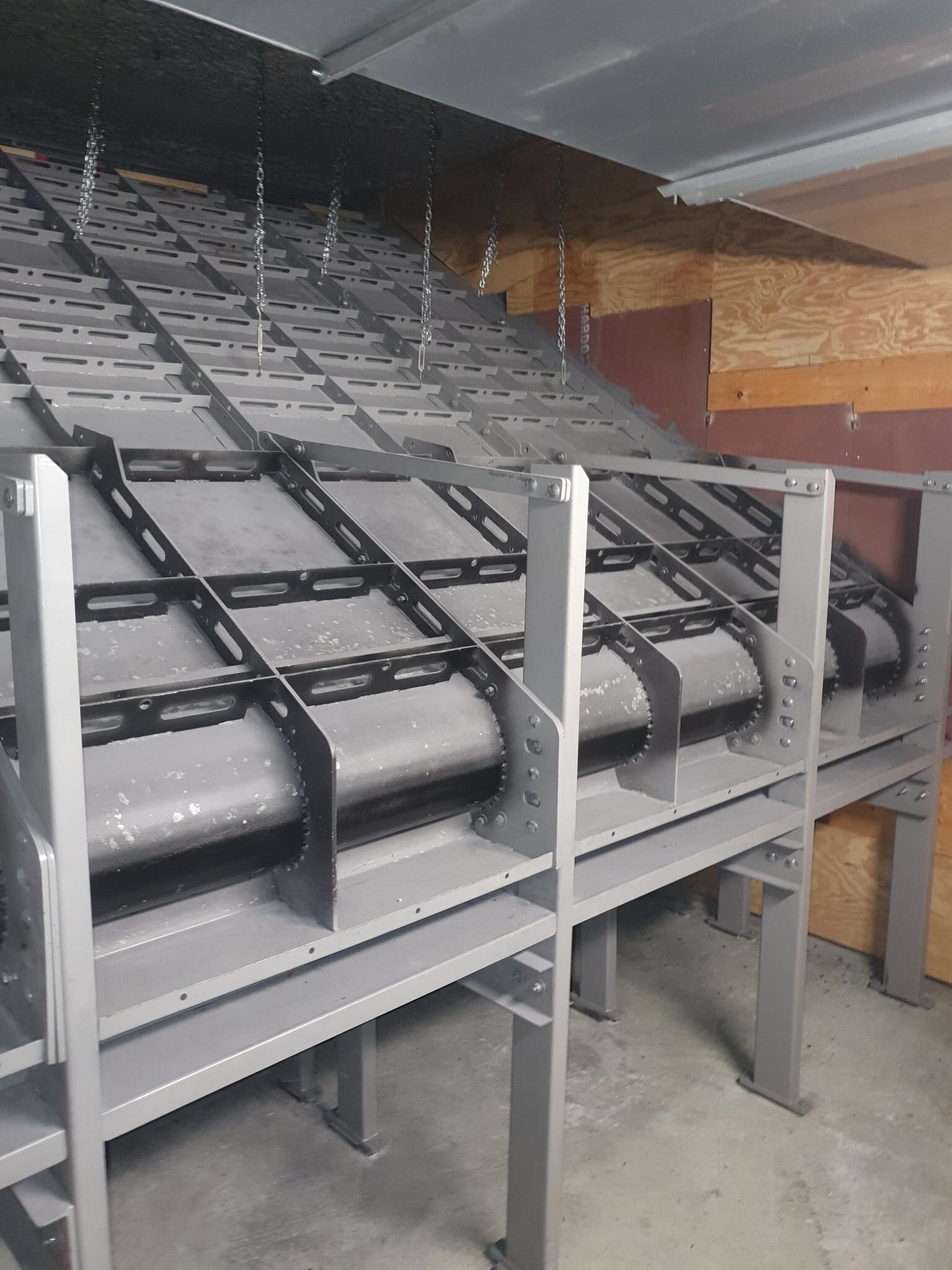
- Composition: superposition of inclined sheets
- 10mm plates in hardness Brinell 500
- Depth of about 5m
- Retrieval of the balls in bins located at the rear
- No deceleration chamber
- Resistance to ammunition up to about 4000 joules (5.56, 7.62, .300 etc)
Heavy short escalator bullet trap: suitable for both handguns and shoulder weapons
- Impact sheets in 8mm hardness Brinell 500
- Deceleration chambers are an integral part of the ball trap and are located at man-height at the rear of the ball trap
- Depth reduced to less than 4m
- Resistance to bullets up to about 4000 joules (5.56, 7.62, .300 etc)